The LONVIA Edit
Curated insights on space, health, investment, and the future of living.
Circadian Science
What autumn does to your body clock
The LONVIA
Edit
Curated insights on space, health, investment, and the future of living.
Circadian Science
What autumn does to your body clock
10 min read
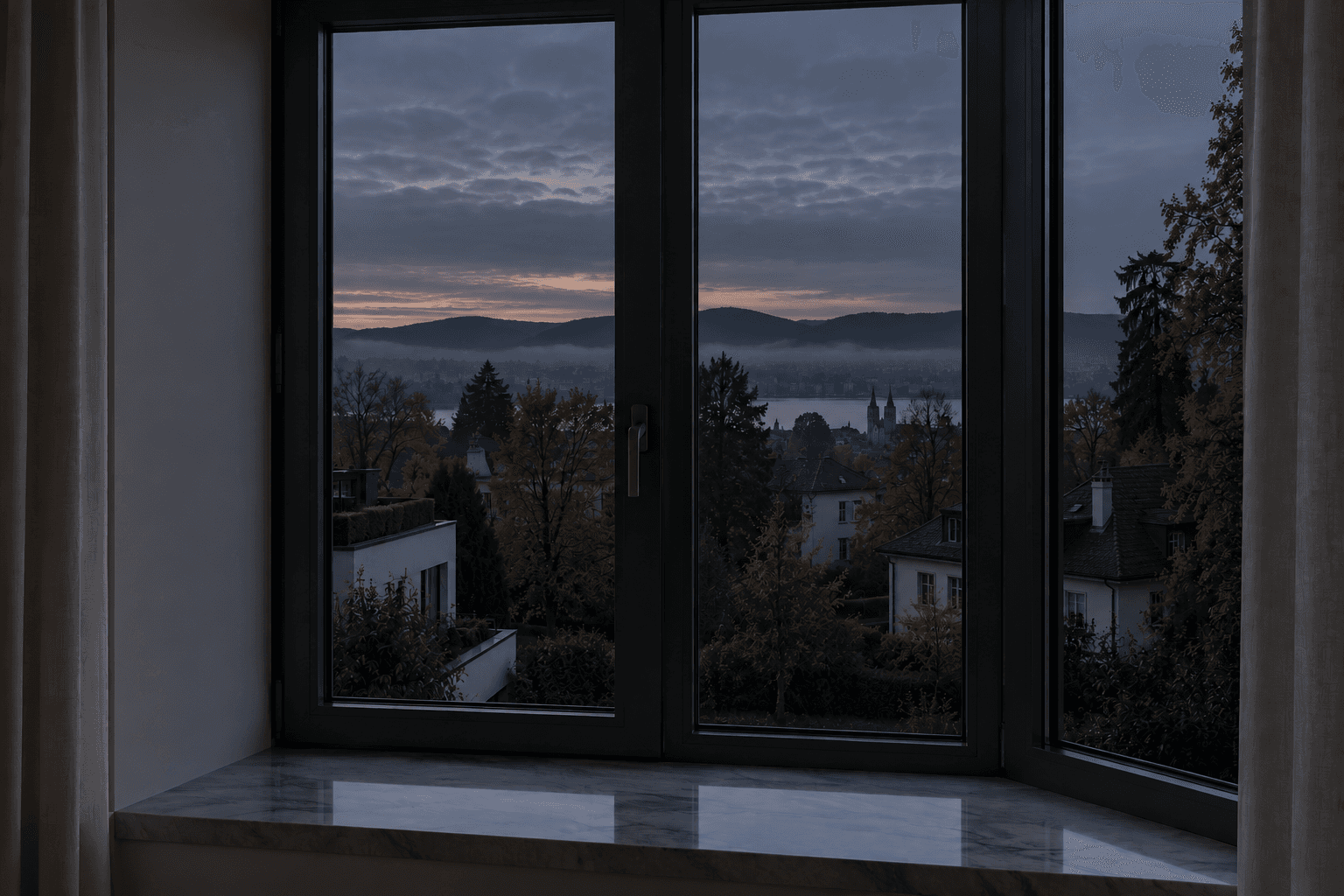
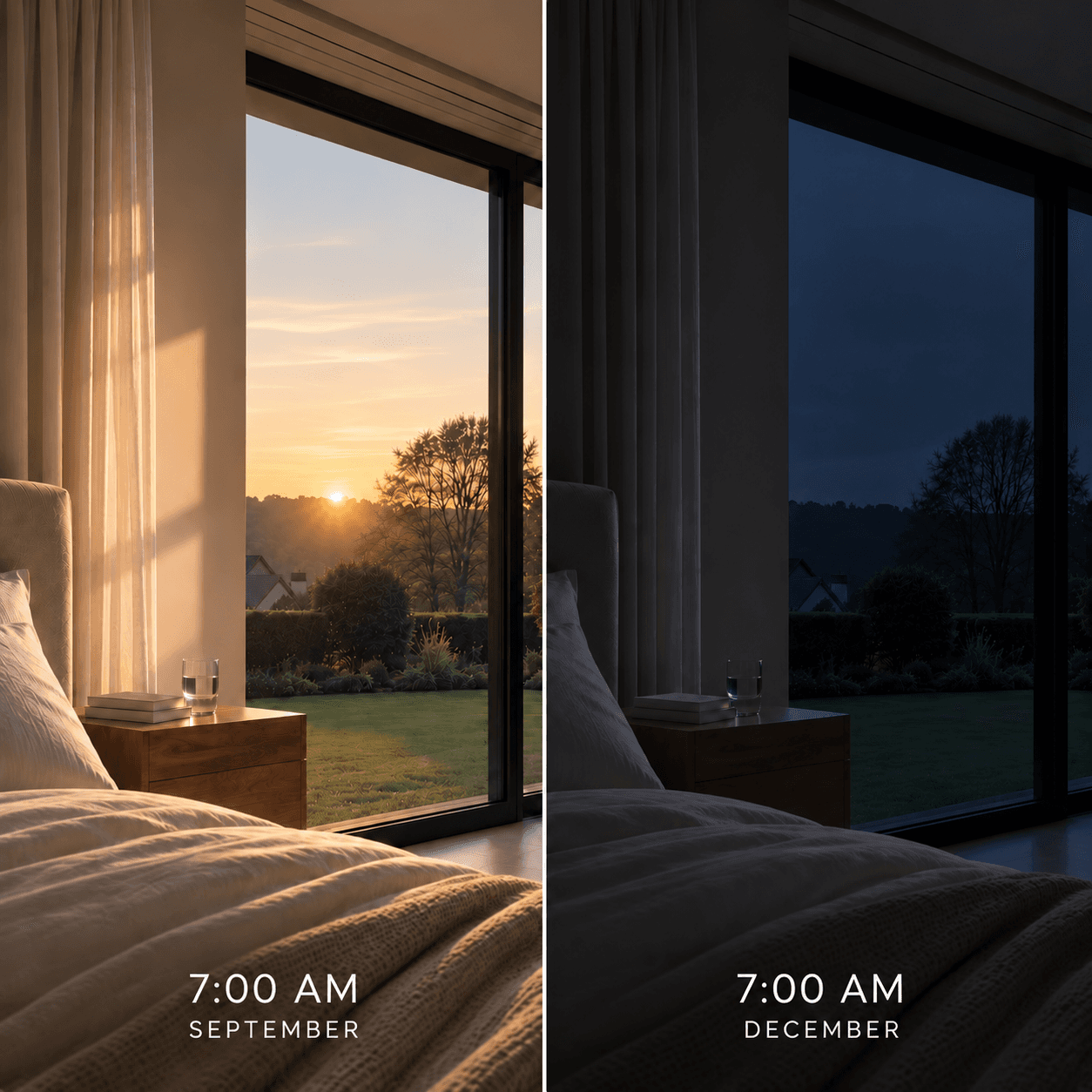
Autumn changes light in two ways. The day shortens fastest around the September equinox, so mornings darken and the biological night lengthens. At the end of October, the clocks go back one hour, shifting daylight against the working day. Both reduce the morning light that anchors the body clock. This is why sleep, energy and mood often shift as the season turns.
Mornings are darker than a month ago, and evenings close in earlier. The change is physical and measurable. In late October the clocks go back, and a second change arrives on top of the first.
Two changes within weeks of each other
The first change is gradual and astronomical. As the Earth tilts away from the sun, dawn arrives later, dusk earlier, and total daily light falls. This has been under way since midsummer and is accelerating now.
The second change is abrupt and social. At the end of October, most of Europe puts its clocks back one hour. North America follows a week later.
The sun does not change that night. The label on the hours does. Daylight now reaches the alarm and the working day at a different point.
Both changes act on the same thing: the morning light the body clock uses to set its time.
The day is shortening fastest now
Day length does not change at a steady rate. It changes fastest around the equinox in late September, not in the depth of winter.
At the equinox, day and night each last roughly 12 hours. Yet the day is contracting more quickly than at any other point in the year.
Distance from the equator sharpens the swing: the further north, the larger the daily loss. Each morning is measurably darker than the last, and the body reads the difference.
The body still keeps a seasonal calendar
Modern life appears to have left the seasons behind, but the system that reads them is intact.
Thomas Wehr exposed volunteers to two artificial photoperiods: a long summer day and a short winter day. Under the winter setting, with 14 hours of darkness, nightly melatonin secretion lasted about 12.5 hours. Under the summer setting, it lasted 10.3 hours.
Sleep lengthened and divided into two episodes, as pre-industrial accounts of winter nights describe. Humans retain the photoperiodic response seen in other mammals. The biological night expands as the outdoor night grows.

Indoor light hides the season, but not completely
The seasonal response is clearest in controlled darkness. In ordinary homes it is often blunted. Electric light fills the evening and masks the lengthening night.
This partly protects the clock. Many homes are left with enough evening light to hide the seasonal signal. They get too little daytime light to replace it. The season still reaches the body, in a distorted form.
Autumn takes the morning first
Of all the light in a day, morning light does the most work. It is the principal signal that anchors the 24-hour clock. It realigns the clock with the outside world and sets the timing of that night's sleep. Autumn removes it first.
Through September and October, dawn moves later while alarms and school runs stay where they were. Without that morning cue, the clock tends to drift later.
Waking becomes harder because the body is asked to rise before its own night has ended. The heaviness of an autumn morning is a timing mismatch, not a failure of will.
Then the clocks go back
In the European Union and the United Kingdom, the clocks go back on the last Sunday of October. One hour moves from the evening to the morning.
Folklore treats the autumn change as the easy one, an extra hour of sleep. The evidence is less generous.
Studies of the autumn transition find a real, if short-lived, disruption to sleep and to the rest-activity cycle. Restlessness rises in the nights that follow. Morning types tend to find the autumn change hardest. People with a pronounced seasonal response feel both transitions more.
The body clock does not move one hour because the wall clock did. For several days, internal time and the social schedule sit one hour apart. Darker evenings then retime the day. The extra hour in bed is borrowed.
Light and the seasonal dip in mood
Autumn carries a mood as well as a schedule. Reduced daylight through autumn and winter is linked to a recognised seasonal pattern of low mood. First described in 1984, it has long been tied to the loss of light rather than the cold.
It ranges from a mild dip in energy to a clinical condition that follows the calendar. What links the range is reduced light, above all in the morning.
An established clinical approach to the winter pattern is bright morning light, given when the outdoor signal is missing.
A mild seasonal dip often eases with more daylight and a steady routine. If low mood is persistent or heavy, speak to a doctor or another qualified professional. The winter pattern is treatable, and there is no reason to wait it out alone.
What helps

The limits of the evidence
People differ. A morning type and an evening type experience the same autumn, and the same clock change, differently. The size of the seasonal effect varies widely between individuals, and indoor light blunts it for many.
Whether societies should keep changing the clocks remains an open question. The American Academy of Sleep Medicine argues that the transitions carry measurable public-health costs.
At its more serious end, the seasonal pattern of low mood is a clinical matter. Light habits alone do not resolve it.
Autumn removes light from the part of the day the clock depends on most. The clock change then moves an hour of daylight out of the evening. Morning light and a steady routine give the clock back that signal.
With light,
Roksana Fasovska
LONVIA Founder
Frequently asked questions
Why does the autumn clock change make people tired?
Setting the clocks back puts internal time and the daily schedule one hour apart, after weeks of shortening days. The body clock takes several days to adjust. Studies show a real, if short-lived, effect on sleep.
Does autumn change the body clock?
Yes. As nights lengthen, the nightly duration of melatonin secretion tends to increase. Without morning light, the clock drifts later. Humans show a measurable seasonal response, though indoor light blunts it.
Why is morning light more important in autumn?
Morning light is the principal signal that anchors the 24-hour clock. Autumn delays dawn and removes much of it. The clock loses its main daily cue while routines stay fixed.
What helps during autumn and the clock change?
Bright light early in the day, a consistent sleep schedule across the change, and dim evenings. Those sensitive to the transition can shift bedtime gradually beforehand. If low mood persists, speak to a professional.
References
1. Wehr TA. The durations of human melatonin secretion and sleep respond to changes in daylength (photoperiod). Journal of Clinical Endocrinology and Metabolism. 1991;73(6):1276-1280.
2. Wehr TA. Melatonin and seasonal rhythms. Journal of Biological Rhythms. 1997;12(6):518-527.
3. Rosenthal NE, Sack DA, Gillin JC, et al. Seasonal affective disorder: a description of the syndrome and preliminary findings with light therapy. Archives of General Psychiatry. 1984;41(1):72-80.
4. Lahti TA, Leppamaki S, Lonnqvist J, Partonen T. Transitions into and out of daylight saving time compromise sleep and the rest-activity cycles. BMC Physiology. 2008;8:3.
5. Zolfaghari S, Yao C, Wolfson C, et al. Impact of daylight saving time transitions on sleep. Neurology. 2023.
6. Rishi MA, Ahmed O, Barrantes Perez JH, et al. Daylight saving time: an American Academy of Sleep Medicine position statement. Journal of Clinical Sleep Medicine. 2020;16(10):1781-1784.
7. Wright KP Jr, McHill AW, Birks BR, Griffin BR, Rusterholz T, Chinoy ED. Entrainment of the human circadian clock to the natural light-dark cycle. Current Biology. 2013;23(16):1554-1558.
8. Stothard ER, McHill AW, Depner CM, et al. Circadian entrainment to the natural light-dark cycle across seasons and the weekend. Current Biology. 2017;27(4):508-513.
9. Khalsa SBS, Jewett ME, Cajochen C, Czeisler CA. A phase response curve to single bright light pulses in human subjects. Journal of Physiology. 2003;549(3):945-952.
10. Brown TM, Brainard GC, Cajochen C, et al. Recommendations for daytime, evening, and night-time indoor light exposure to best support physiology, sleep, and wakefulness in healthy adults. PLoS Biology. 2022;20(3):e3001571.


Ready to shape a healthier future?
Book an introductory conversation to explore how well-being can be integrated into your space or project
Ready to shape a healthier future?
Book an introductory conversation to explore how well-being can be integrated into your space or project
Ready to shape a healthier future?
Book an introductory conversation to explore how well-being can be integrated into your space or project
10 min read
Key Insight
Autumn changes light in two ways. The day shortens fastest around the September equinox, so mornings darken and the biological night lengthens. At the end of October, the clocks go back one hour, shifting daylight against the working day. Both reduce the morning light that anchors the body clock. This is why sleep, energy and mood often shift as the season turns.
Autumn changes light in two ways. The day shortens fastest around the September equinox, so mornings darken and the biological night lengthens. At the end of October, the clocks go back one hour, shifting daylight against the working day. Both reduce the morning light that anchors the body clock. This is why sleep, energy and mood often shift as the season turns.
Mornings are darker than a month ago, and evenings close in earlier. The change is physical and measurable. In late October the clocks go back, and a second change arrives on top of the first.
Two changes within weeks of each other
The first change is gradual and astronomical. As the Earth tilts away from the sun, dawn arrives later, dusk earlier, and total daily light falls. This has been under way since midsummer and is accelerating now.
The second change is abrupt and social. At the end of October, most of Europe puts its clocks back one hour. North America follows a week later.
The sun does not change that night. The label on the hours does. Daylight now reaches the alarm and the working day at a different point.
Both changes act on the same thing: the morning light the body clock uses to set its time.
Two changes within weeks of each other
The first change is gradual and astronomical. As the Earth tilts away from the sun, dawn arrives later, dusk earlier, and total daily light falls. This has been under way since midsummer and is accelerating now.
The second change is abrupt and social. At the end of October, most of Europe puts its clocks back one hour. North America follows a week later.
The sun does not change that night. The label on the hours does. Daylight now reaches the alarm and the working day at a different point.
Both changes act on the same thing: the morning light the body clock uses to set its time.
Two changes within weeks of each other
The first change is gradual and astronomical. As the Earth tilts away from the sun, dawn arrives later, dusk earlier, and total daily light falls. This has been under way since midsummer and is accelerating now.
The second change is abrupt and social. At the end of October, most of Europe puts its clocks back one hour. North America follows a week later.
The sun does not change that night. The label on the hours does. Daylight now reaches the alarm and the working day at a different point.
Both changes act on the same thing: the morning light the body clock uses to set its time.
Mornings are darker than a month ago, and evenings close in earlier. The change is physical and measurable. In late October the clocks go back, and a second change arrives on top of the first.
The day is shortening fastest now
Day length does not change at a steady rate. It changes fastest around the equinox in late September, not in the depth of winter.
At the equinox, day and night each last roughly 12 hours. Yet the day is contracting more quickly than at any other point in the year.
Distance from the equator sharpens the swing: the further north, the larger the daily loss. Each morning is measurably darker than the last, and the body reads the difference.
The day is shortening fastest now
Day length does not change at a steady rate. It changes fastest around the equinox in late September, not in the depth of winter.
At the equinox, day and night each last roughly 12 hours. Yet the day is contracting more quickly than at any other point in the year.
Distance from the equator sharpens the swing: the further north, the larger the daily loss. Each morning is measurably darker than the last, and the body reads the difference.
The body still keeps a seasonal calendar
Modern life appears to have left the seasons behind, but the system that reads them is intact.
Thomas Wehr exposed volunteers to two artificial photoperiods: a long summer day and a short winter day. Under the winter setting, with 14 hours of darkness, nightly melatonin secretion lasted about 12.5 hours. Under the summer setting, it lasted 10.3 hours.
Sleep lengthened and divided into two episodes, as pre-industrial accounts of winter nights describe. Humans retain the photoperiodic response seen in other mammals. The biological night expands as the outdoor night grows.
The body still keeps a seasonal calendar
Modern life appears to have left the seasons behind, but the system that reads them is intact.
Thomas Wehr exposed volunteers to two artificial photoperiods: a long summer day and a short winter day. Under the winter setting, with 14 hours of darkness, nightly melatonin secretion lasted about 12.5 hours. Under the summer setting, it lasted 10.3 hours.
Sleep lengthened and divided into two episodes, as pre-industrial accounts of winter nights describe. Humans retain the photoperiodic response seen in other mammals. The biological night expands as the outdoor night grows.
Indoor light hides the season, but not completely
The seasonal response is clearest in controlled darkness. In ordinary homes it is often blunted. Electric light fills the evening and masks the lengthening night.
This partly protects the clock. Many homes are left with enough evening light to hide the seasonal signal. They get too little daytime light to replace it. The season still reaches the body, in a distorted form.
Indoor light hides the season, but not completely
The seasonal response is clearest in controlled darkness. In ordinary homes it is often blunted. Electric light fills the evening and masks the lengthening night.
This partly protects the clock. Many homes are left with enough evening light to hide the seasonal signal. They get too little daytime light to replace it. The season still reaches the body, in a distorted form.
Autumn takes the morning first
Of all the light in a day, morning light does the most work. It is the principal signal that anchors the 24-hour clock. It realigns the clock with the outside world and sets the timing of that night's sleep. Autumn removes it first.
Through September and October, dawn moves later while alarms and school runs stay where they were. Without that morning cue, the clock tends to drift later.
Waking becomes harder because the body is asked to rise before its own night has ended. The heaviness of an autumn morning is a timing mismatch, not a failure of will.
Autumn takes the morning first
Of all the light in a day, morning light does the most work. It is the principal signal that anchors the 24-hour clock. It realigns the clock with the outside world and sets the timing of that night's sleep. Autumn removes it first.
Through September and October, dawn moves later while alarms and school runs stay where they were. Without that morning cue, the clock tends to drift later.
Waking becomes harder because the body is asked to rise before its own night has ended. The heaviness of an autumn morning is a timing mismatch, not a failure of will.
Then the clocks go back
In the European Union and the United Kingdom, the clocks go back on the last Sunday of October. One hour moves from the evening to the morning.
Folklore treats the autumn change as the easy one, an extra hour of sleep. The evidence is less generous.
Studies of the autumn transition find a real, if short-lived, disruption to sleep and to the rest-activity cycle. Restlessness rises in the nights that follow. Morning types tend to find the autumn change hardest. People with a pronounced seasonal response feel both transitions more.
The body clock does not move one hour because the wall clock did. For several days, internal time and the social schedule sit one hour apart. Darker evenings then retime the day. The extra hour in bed is borrowed.
Then the clocks go back
In the European Union and the United Kingdom, the clocks go back on the last Sunday of October. One hour moves from the evening to the morning.
Folklore treats the autumn change as the easy one, an extra hour of sleep. The evidence is less generous.
Studies of the autumn transition find a real, if short-lived, disruption to sleep and to the rest-activity cycle. Restlessness rises in the nights that follow. Morning types tend to find the autumn change hardest. People with a pronounced seasonal response feel both transitions more.
The body clock does not move one hour because the wall clock did. For several days, internal time and the social schedule sit one hour apart. Darker evenings then retime the day. The extra hour in bed is borrowed.
Light and the seasonal dip in mood
Autumn carries a mood as well as a schedule. Reduced daylight through autumn and winter is linked to a recognised seasonal pattern of low mood. First described in 1984, it has long been tied to the loss of light rather than the cold.
It ranges from a mild dip in energy to a clinical condition that follows the calendar. What links the range is reduced light, above all in the morning.
An established clinical approach to the winter pattern is bright morning light, given when the outdoor signal is missing.
A mild seasonal dip often eases with more daylight and a steady routine. If low mood is persistent or heavy, speak to a doctor or another qualified professional. The winter pattern is treatable, and there is no reason to wait it out alone.
Light and the seasonal dip in mood
Autumn carries a mood as well as a schedule. Reduced daylight through autumn and winter is linked to a recognised seasonal pattern of low mood. First described in 1984, it has long been tied to the loss of light rather than the cold.
It ranges from a mild dip in energy to a clinical condition that follows the calendar. What links the range is reduced light, above all in the morning.
An established clinical approach to the winter pattern is bright morning light, given when the outdoor signal is missing.
A mild seasonal dip often eases with more daylight and a steady routine. If low mood is persistent or heavy, speak to a doctor or another qualified professional. The winter pattern is treatable, and there is no reason to wait it out alone.
What helps
What helps
The limits of the evidence
People differ. A morning type and an evening type experience the same autumn, and the same clock change, differently. The size of the seasonal effect varies widely between individuals, and indoor light blunts it for many.
Whether societies should keep changing the clocks remains an open question. The American Academy of Sleep Medicine argues that the transitions carry measurable public-health costs.
At its more serious end, the seasonal pattern of low mood is a clinical matter. Light habits alone do not resolve it.
Autumn removes light from the part of the day the clock depends on most. The clock change then moves an hour of daylight out of the evening. Morning light and a steady routine give the clock back that signal.
The limits of the evidence
People differ. A morning type and an evening type experience the same autumn, and the same clock change, differently. The size of the seasonal effect varies widely between individuals, and indoor light blunts it for many.
Whether societies should keep changing the clocks remains an open question. The American Academy of Sleep Medicine argues that the transitions carry measurable public-health costs.
At its more serious end, the seasonal pattern of low mood is a clinical matter. Light habits alone do not resolve it.
Autumn removes light from the part of the day the clock depends on most. The clock change then moves an hour of daylight out of the evening. Morning light and a steady routine give the clock back that signal.
Frequently asked questions
Why does the autumn clock change make people tired?
Setting the clocks back puts internal time and the daily schedule one hour apart, after weeks of shortening days. The body clock takes several days to adjust. Studies show a real, if short-lived, effect on sleep.
Does autumn change the body clock?
Yes. As nights lengthen, the nightly duration of melatonin secretion tends to increase. Without morning light, the clock drifts later. Humans show a measurable seasonal response, though indoor light blunts it.
Why is morning light more important in autumn?
Morning light is the principal signal that anchors the 24-hour clock. Autumn delays dawn and removes much of it. The clock loses its main daily cue while routines stay fixed.
What helps during autumn and the clock change?
Bright light early in the day, a consistent sleep schedule across the change, and dim evenings. Those sensitive to the transition can shift bedtime gradually beforehand. If low mood persists, speak to a professional.
References
1. Wehr TA. The durations of human melatonin secretion and sleep respond to changes in daylength (photoperiod). Journal of Clinical Endocrinology and Metabolism. 1991;73(6):1276-1280.
2. Wehr TA. Melatonin and seasonal rhythms. Journal of Biological Rhythms. 1997;12(6):518-527.
3. Rosenthal NE, Sack DA, Gillin JC, et al. Seasonal affective disorder: a description of the syndrome and preliminary findings with light therapy. Archives of General Psychiatry. 1984;41(1):72-80.
4. Lahti TA, Leppamaki S, Lonnqvist J, Partonen T. Transitions into and out of daylight saving time compromise sleep and the rest-activity cycles. BMC Physiology. 2008;8:3.
5. Zolfaghari S, Yao C, Wolfson C, et al. Impact of daylight saving time transitions on sleep. Neurology. 2023.
6. Rishi MA, Ahmed O, Barrantes Perez JH, et al. Daylight saving time: an American Academy of Sleep Medicine position statement. Journal of Clinical Sleep Medicine. 2020;16(10):1781-1784.
7. Wright KP Jr, McHill AW, Birks BR, Griffin BR, Rusterholz T, Chinoy ED. Entrainment of the human circadian clock to the natural light-dark cycle. Current Biology. 2013;23(16):1554-1558.
8. Stothard ER, McHill AW, Depner CM, et al. Circadian entrainment to the natural light-dark cycle across seasons and the weekend. Current Biology. 2017;27(4):508-513.
9. Khalsa SBS, Jewett ME, Cajochen C, Czeisler CA. A phase response curve to single bright light pulses in human subjects. Journal of Physiology. 2003;549(3):945-952.
10. Brown TM, Brainard GC, Cajochen C, et al. Recommendations for daytime, evening, and night-time indoor light exposure to best support physiology, sleep, and wakefulness in healthy adults. PLoS Biology. 2022;20(3):e3001571.
References
1. Wehr TA. The durations of human melatonin secretion and sleep respond to changes in daylength (photoperiod). Journal of Clinical Endocrinology and Metabolism. 1991;73(6):1276-1280.
2. Wehr TA. Melatonin and seasonal rhythms. Journal of Biological Rhythms. 1997;12(6):518-527.
3. Rosenthal NE, Sack DA, Gillin JC, et al. Seasonal affective disorder: a description of the syndrome and preliminary findings with light therapy. Archives of General Psychiatry. 1984;41(1):72-80.
4. Lahti TA, Leppamaki S, Lonnqvist J, Partonen T. Transitions into and out of daylight saving time compromise sleep and the rest-activity cycles. BMC Physiology. 2008;8:3.
5. Zolfaghari S, Yao C, Wolfson C, et al. Impact of daylight saving time transitions on sleep. Neurology. 2023.
6. Rishi MA, Ahmed O, Barrantes Perez JH, et al. Daylight saving time: an American Academy of Sleep Medicine position statement. Journal of Clinical Sleep Medicine. 2020;16(10):1781-1784.
7. Wright KP Jr, McHill AW, Birks BR, Griffin BR, Rusterholz T, Chinoy ED. Entrainment of the human circadian clock to the natural light-dark cycle. Current Biology. 2013;23(16):1554-1558.
8. Stothard ER, McHill AW, Depner CM, et al. Circadian entrainment to the natural light-dark cycle across seasons and the weekend. Current Biology. 2017;27(4):508-513.
9. Khalsa SBS, Jewett ME, Cajochen C, Czeisler CA. A phase response curve to single bright light pulses in human subjects. Journal of Physiology. 2003;549(3):945-952.
10. Brown TM, Brainard GC, Cajochen C, et al. Recommendations for daytime, evening, and night-time indoor light exposure to best support physiology, sleep, and wakefulness in healthy adults. PLoS Biology. 2022;20(3):e3001571.
With light,
Roksana Fasovska
Roksana Fasovska
LONVIA Founder
Circadian Science
What autumn does to your body clock
10 min read
Autumn changes light in two ways. The day shortens fastest around the September equinox, so mornings darken and the biological night lengthens. At the end of October, the clocks go back one hour, shifting daylight against the working day. Both reduce the morning light that anchors the body clock. This is why sleep, energy and mood often shift as the season turns.
Key Insight
Mornings are darker than a month ago, and evenings close in earlier. The change is physical and measurable. In late October the clocks go back, and a second change arrives on top of the first.
Two changes within weeks of each other
The first change is gradual and astronomical. As the Earth tilts away from the sun, dawn arrives later, dusk earlier, and total daily light falls. This has been under way since midsummer and is accelerating now.
The second change is abrupt and social. At the end of October, most of Europe puts its clocks back one hour. North America follows a week later.
The sun does not change that night. The label on the hours does. Daylight now reaches the alarm and the working day at a different point.
Both changes act on the same thing: the morning light the body clock uses to set its time.
Two changes within weeks of each other
The first change is gradual and astronomical. As the Earth tilts away from the sun, dawn arrives later, dusk earlier, and total daily light falls. This has been under way since midsummer and is accelerating now.
The second change is abrupt and social. At the end of October, most of Europe puts its clocks back one hour. North America follows a week later.
The sun does not change that night. The label on the hours does. Daylight now reaches the alarm and the working day at a different point.
Both changes act on the same thing: the morning light the body clock uses to set its time.
Two changes within weeks of each other
The first change is gradual and astronomical. As the Earth tilts away from the sun, dawn arrives later, dusk earlier, and total daily light falls. This has been under way since midsummer and is accelerating now.
The second change is abrupt and social. At the end of October, most of Europe puts its clocks back one hour. North America follows a week later.
The sun does not change that night. The label on the hours does. Daylight now reaches the alarm and the working day at a different point.
Both changes act on the same thing: the morning light the body clock uses to set its time.
Mornings are darker than a month ago, and evenings close in earlier. The change is physical and measurable. In late October the clocks go back, and a second change arrives on top of the first.
The day is shortening fastest now
Day length does not change at a steady rate. It changes fastest around the equinox in late September, not in the depth of winter.
At the equinox, day and night each last roughly 12 hours. Yet the day is contracting more quickly than at any other point in the year.
Distance from the equator sharpens the swing: the further north, the larger the daily loss. Each morning is measurably darker than the last, and the body reads the difference.
The day is shortening fastest now
Day length does not change at a steady rate. It changes fastest around the equinox in late September, not in the depth of winter.
At the equinox, day and night each last roughly 12 hours. Yet the day is contracting more quickly than at any other point in the year.
Distance from the equator sharpens the swing: the further north, the larger the daily loss. Each morning is measurably darker than the last, and the body reads the difference.
The body still keeps a seasonal calendar
Modern life appears to have left the seasons behind, but the system that reads them is intact.
Thomas Wehr exposed volunteers to two artificial photoperiods: a long summer day and a short winter day. Under the winter setting, with 14 hours of darkness, nightly melatonin secretion lasted about 12.5 hours. Under the summer setting, it lasted 10.3 hours.
Sleep lengthened and divided into two episodes, as pre-industrial accounts of winter nights describe. Humans retain the photoperiodic response seen in other mammals. The biological night expands as the outdoor night grows.
The body still keeps a seasonal calendar
Modern life appears to have left the seasons behind, but the system that reads them is intact.
Thomas Wehr exposed volunteers to two artificial photoperiods: a long summer day and a short winter day. Under the winter setting, with 14 hours of darkness, nightly melatonin secretion lasted about 12.5 hours. Under the summer setting, it lasted 10.3 hours.
Sleep lengthened and divided into two episodes, as pre-industrial accounts of winter nights describe. Humans retain the photoperiodic response seen in other mammals. The biological night expands as the outdoor night grows.
Indoor light hides the season, but not completely
The seasonal response is clearest in controlled darkness. In ordinary homes it is often blunted. Electric light fills the evening and masks the lengthening night.
This partly protects the clock. Many homes are left with enough evening light to hide the seasonal signal. They get too little daytime light to replace it. The season still reaches the body, in a distorted form.
Indoor light hides the season, but not completely
The seasonal response is clearest in controlled darkness. In ordinary homes it is often blunted. Electric light fills the evening and masks the lengthening night.
This partly protects the clock. Many homes are left with enough evening light to hide the seasonal signal. They get too little daytime light to replace it. The season still reaches the body, in a distorted form.
Autumn takes the morning first
Of all the light in a day, morning light does the most work. It is the principal signal that anchors the 24-hour clock. It realigns the clock with the outside world and sets the timing of that night's sleep. Autumn removes it first.
Through September and October, dawn moves later while alarms and school runs stay where they were. Without that morning cue, the clock tends to drift later.
Waking becomes harder because the body is asked to rise before its own night has ended. The heaviness of an autumn morning is a timing mismatch, not a failure of will.
Autumn takes the morning first
Of all the light in a day, morning light does the most work. It is the principal signal that anchors the 24-hour clock. It realigns the clock with the outside world and sets the timing of that night's sleep. Autumn removes it first.
Through September and October, dawn moves later while alarms and school runs stay where they were. Without that morning cue, the clock tends to drift later.
Waking becomes harder because the body is asked to rise before its own night has ended. The heaviness of an autumn morning is a timing mismatch, not a failure of will.
Then the clocks go back
In the European Union and the United Kingdom, the clocks go back on the last Sunday of October. One hour moves from the evening to the morning.
Folklore treats the autumn change as the easy one, an extra hour of sleep. The evidence is less generous.
Studies of the autumn transition find a real, if short-lived, disruption to sleep and to the rest-activity cycle. Restlessness rises in the nights that follow. Morning types tend to find the autumn change hardest. People with a pronounced seasonal response feel both transitions more.
The body clock does not move one hour because the wall clock did. For several days, internal time and the social schedule sit one hour apart. Darker evenings then retime the day. The extra hour in bed is borrowed.
Then the clocks go back
In the European Union and the United Kingdom, the clocks go back on the last Sunday of October. One hour moves from the evening to the morning.
Folklore treats the autumn change as the easy one, an extra hour of sleep. The evidence is less generous.
Studies of the autumn transition find a real, if short-lived, disruption to sleep and to the rest-activity cycle. Restlessness rises in the nights that follow. Morning types tend to find the autumn change hardest. People with a pronounced seasonal response feel both transitions more.
The body clock does not move one hour because the wall clock did. For several days, internal time and the social schedule sit one hour apart. Darker evenings then retime the day. The extra hour in bed is borrowed.
Light and the seasonal dip in mood
Autumn carries a mood as well as a schedule. Reduced daylight through autumn and winter is linked to a recognised seasonal pattern of low mood. First described in 1984, it has long been tied to the loss of light rather than the cold.
It ranges from a mild dip in energy to a clinical condition that follows the calendar. What links the range is reduced light, above all in the morning.
An established clinical approach to the winter pattern is bright morning light, given when the outdoor signal is missing.
A mild seasonal dip often eases with more daylight and a steady routine. If low mood is persistent or heavy, speak to a doctor or another qualified professional. The winter pattern is treatable, and there is no reason to wait it out alone.
Light and the seasonal dip in mood
Autumn carries a mood as well as a schedule. Reduced daylight through autumn and winter is linked to a recognised seasonal pattern of low mood. First described in 1984, it has long been tied to the loss of light rather than the cold.
It ranges from a mild dip in energy to a clinical condition that follows the calendar. What links the range is reduced light, above all in the morning.
An established clinical approach to the winter pattern is bright morning light, given when the outdoor signal is missing.
A mild seasonal dip often eases with more daylight and a steady routine. If low mood is persistent or heavy, speak to a doctor or another qualified professional. The winter pattern is treatable, and there is no reason to wait it out alone.
What helps
What helps
The limits of the evidence
People differ. A morning type and an evening type experience the same autumn, and the same clock change, differently. The size of the seasonal effect varies widely between individuals, and indoor light blunts it for many.
Whether societies should keep changing the clocks remains an open question. The American Academy of Sleep Medicine argues that the transitions carry measurable public-health costs.
At its more serious end, the seasonal pattern of low mood is a clinical matter. Light habits alone do not resolve it.
Autumn removes light from the part of the day the clock depends on most. The clock change then moves an hour of daylight out of the evening. Morning light and a steady routine give the clock back that signal.
The limits of the evidence
People differ. A morning type and an evening type experience the same autumn, and the same clock change, differently. The size of the seasonal effect varies widely between individuals, and indoor light blunts it for many.
Whether societies should keep changing the clocks remains an open question. The American Academy of Sleep Medicine argues that the transitions carry measurable public-health costs.
At its more serious end, the seasonal pattern of low mood is a clinical matter. Light habits alone do not resolve it.
Autumn removes light from the part of the day the clock depends on most. The clock change then moves an hour of daylight out of the evening. Morning light and a steady routine give the clock back that signal.
Frequently asked questions
Why does the autumn clock change make people tired?
Setting the clocks back puts internal time and the daily schedule one hour apart, after weeks of shortening days. The body clock takes several days to adjust. Studies show a real, if short-lived, effect on sleep.
Does autumn change the body clock?
Yes. As nights lengthen, the nightly duration of melatonin secretion tends to increase. Without morning light, the clock drifts later. Humans show a measurable seasonal response, though indoor light blunts it.
Why is morning light more important in autumn?
Morning light is the principal signal that anchors the 24-hour clock. Autumn delays dawn and removes much of it. The clock loses its main daily cue while routines stay fixed.
What helps during autumn and the clock change?
Bright light early in the day, a consistent sleep schedule across the change, and dim evenings. Those sensitive to the transition can shift bedtime gradually beforehand. If low mood persists, speak to a professional.
References
1. Wehr TA. The durations of human melatonin secretion and sleep respond to changes in daylength (photoperiod). Journal of Clinical Endocrinology and Metabolism. 1991;73(6):1276-1280.
2. Wehr TA. Melatonin and seasonal rhythms. Journal of Biological Rhythms. 1997;12(6):518-527.
3. Rosenthal NE, Sack DA, Gillin JC, et al. Seasonal affective disorder: a description of the syndrome and preliminary findings with light therapy. Archives of General Psychiatry. 1984;41(1):72-80.
4. Lahti TA, Leppamaki S, Lonnqvist J, Partonen T. Transitions into and out of daylight saving time compromise sleep and the rest-activity cycles. BMC Physiology. 2008;8:3.
5. Zolfaghari S, Yao C, Wolfson C, et al. Impact of daylight saving time transitions on sleep. Neurology. 2023.
6. Rishi MA, Ahmed O, Barrantes Perez JH, et al. Daylight saving time: an American Academy of Sleep Medicine position statement. Journal of Clinical Sleep Medicine. 2020;16(10):1781-1784.
7. Wright KP Jr, McHill AW, Birks BR, Griffin BR, Rusterholz T, Chinoy ED. Entrainment of the human circadian clock to the natural light-dark cycle. Current Biology. 2013;23(16):1554-1558.
8. Stothard ER, McHill AW, Depner CM, et al. Circadian entrainment to the natural light-dark cycle across seasons and the weekend. Current Biology. 2017;27(4):508-513.
9. Khalsa SBS, Jewett ME, Cajochen C, Czeisler CA. A phase response curve to single bright light pulses in human subjects. Journal of Physiology. 2003;549(3):945-952.
10. Brown TM, Brainard GC, Cajochen C, et al. Recommendations for daytime, evening, and night-time indoor light exposure to best support physiology, sleep, and wakefulness in healthy adults. PLoS Biology. 2022;20(3):e3001571.
References
1. Wehr TA. The durations of human melatonin secretion and sleep respond to changes in daylength (photoperiod). Journal of Clinical Endocrinology and Metabolism. 1991;73(6):1276-1280.
2. Wehr TA. Melatonin and seasonal rhythms. Journal of Biological Rhythms. 1997;12(6):518-527.
3. Rosenthal NE, Sack DA, Gillin JC, et al. Seasonal affective disorder: a description of the syndrome and preliminary findings with light therapy. Archives of General Psychiatry. 1984;41(1):72-80.
4. Lahti TA, Leppamaki S, Lonnqvist J, Partonen T. Transitions into and out of daylight saving time compromise sleep and the rest-activity cycles. BMC Physiology. 2008;8:3.
5. Zolfaghari S, Yao C, Wolfson C, et al. Impact of daylight saving time transitions on sleep. Neurology. 2023.
6. Rishi MA, Ahmed O, Barrantes Perez JH, et al. Daylight saving time: an American Academy of Sleep Medicine position statement. Journal of Clinical Sleep Medicine. 2020;16(10):1781-1784.
7. Wright KP Jr, McHill AW, Birks BR, Griffin BR, Rusterholz T, Chinoy ED. Entrainment of the human circadian clock to the natural light-dark cycle. Current Biology. 2013;23(16):1554-1558.
8. Stothard ER, McHill AW, Depner CM, et al. Circadian entrainment to the natural light-dark cycle across seasons and the weekend. Current Biology. 2017;27(4):508-513.
9. Khalsa SBS, Jewett ME, Cajochen C, Czeisler CA. A phase response curve to single bright light pulses in human subjects. Journal of Physiology. 2003;549(3):945-952.
10. Brown TM, Brainard GC, Cajochen C, et al. Recommendations for daytime, evening, and night-time indoor light exposure to best support physiology, sleep, and wakefulness in healthy adults. PLoS Biology. 2022;20(3):e3001571.
Roksana Fasovska
LONVIA Founder
With light,