The LONVIA Edit
Curated insights on space, health, investment, and the future of living.
Circadian Science
A SAD lamp is a dose. Daily light is a pattern
The LONVIA
Edit
Curated insights on space, health, investment, and the future of living.
Circadian Science
A SAD lamp is a dose. Daily light is a pattern
6 min read
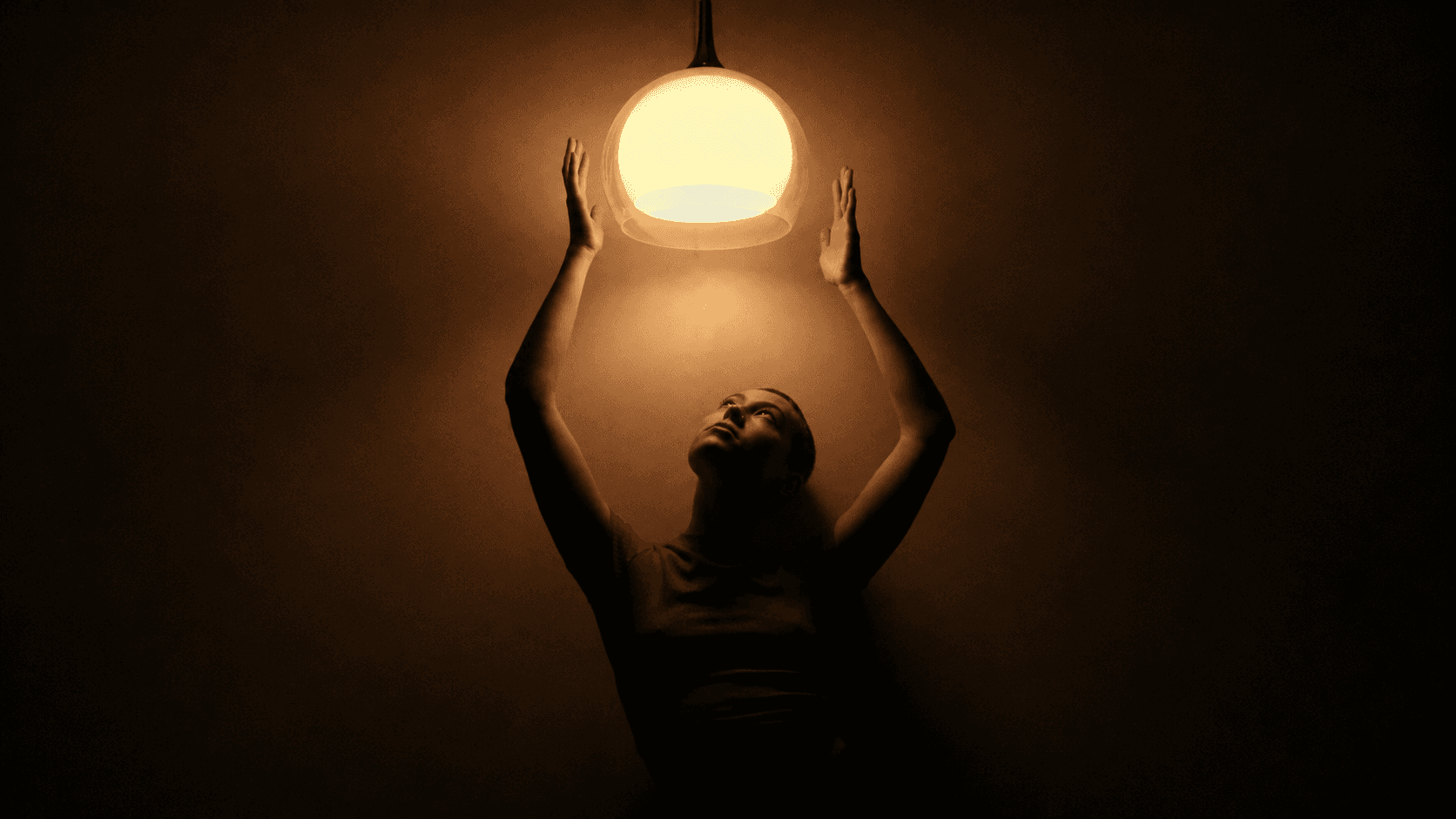
A SAD lamp and daily circadian light are different tools. A SAD lamp delivers a short, intense dose, typically 10,000 lux for about 30 minutes each morning, to treat seasonal affective disorder, a winter-pattern depression. Daily circadian light is a pattern across the whole day: at least 250 mEDI lux at the eye by day, no more than 10 in the evening, near darkness at night. One treats a condition. The other maintains a rhythm. Neither replaces the other.
In November, two ideas about light start to blur. The first is the SAD lamp: the bright box people buy when winter flattens their mood. The second is daily light: how much light reaches the eye across an ordinary day, and when.
They sound like one subject. They are two. One is a clinical treatment for a specific condition. The other is the background signal the body clock reads every day. Using one where the other is needed is a common mistake, and an understandable one.
What is a SAD lamp, exactly?
Seasonal affective disorder was described in 1984 by Norman Rosenthal and colleagues at the US National Institute of Mental Health. It is a depression that arrives with the dark months and lifts in spring, linked to the loss of light rather than to the cold.
The treatment that followed is precise. The standard protocol is a light box delivering 10,000 lux at the eye, for around 30 minutes, early in the morning. The distance is part of the dose. Each box is rated at a specific distance, and the 10,000 lux figure only holds there. Sit further back and the dose falls quickly.
Bright-light therapy is a first-line treatment for the winter pattern, and the evidence is real. A meta-analysis found a significant effect on seasonal depression. A randomised trial found morning light comparable to fluoxetine, a standard antidepressant. The field’s own verdict is measured: effective, moderately so, and not a cure.

Why does the dose matter so much?
The numbers in the protocol are not decoration. They are a dose. In a placebo-controlled trial, bright morning light outperformed an inactive device presented as treatment. The benefit follows the light, not the routine of sitting in front of a box.
Intensity and time also trade against each other. Around two hours at 2,500 lux is needed to match 30 minutes at 10,000 lux. That is why the boxes are so bright.
mEDI, melanopic equivalent daylight illuminance, describes how strongly light registers with the body clock, rather than how bright it looks. A therapy box delivers its dose in one short burst.
A SAD lamp is not a reading lamp turned up. It is a concentrated pulse, timed to the morning, used against a diagnosis.
What can a SAD lamp not do?
This is where the confusion costs something. Because a SAD lamp works for its purpose, people reach for it as a general fix for their light. It is not one.
Thirty minutes of intense morning light does not repair an otherwise dim day. It was never designed to. Use a therapy box for half an hour, spend the rest of the day under ordinary indoor light, and you may have treated a condition you do not have, while leaving the problem you do have untouched.
The lamp is a scalpel. Most daily light problems need something closer to weather.

What is the daily light problem?
It is the subject of most of this journal. The body clock does not run on one morning dose. It reads a pattern across the whole day. In 2022, an international expert consensus set three thresholds, measured at the eye:
Day: at least 250 mEDI lux, sustained.
Evening: no more than 10 mEDI lux, from at least three hours before sleep.
Night: below 1 mEDI lux.
This is not a treatment. It is the maintenance of a rhythm, and it applies to everyone, not only to people with a seasonal depression. The tools differ too: daylight, where you sit in relation to a window, brighter days and darker evenings, rather than a box used for a timed session.

Where do the two problems meet?
The line between them is not perfectly clean, and some of the most interesting recent research sits on it.
Researchers have asked why standard light therapy is only moderately effective. One answer: a short, intense session is very different from the thing it imitates, which is a bright summer day. A proof-of-concept trial tested bright, whole-room light delivered across the whole day, in place of a concentrated morning dose. The trial was small. It was designed to show the approach is workable, not that it is better.
If the idea holds, treating a winter depression and giving the body a well-shaped day of light are related problems. They are still not the same problem, and the everyday version is not a medical treatment.
Which one do you need?
If low mood, low energy and changes in sleep and appetite arrive each winter and lift each spring, that pattern deserves a conversation with a doctor or mental health professional. A SAD lamp is an evidence-based tool when used properly: in the morning, at its rated distance, for the full session. It is best used with professional guidance, not self-prescribed from a product page.
If you feel the ordinary drag of dark mornings and under-lit days, the answer is not half an hour in front of a box. It is more light across more of the day, and darker evenings to match.
The mistake runs both ways: reaching for a clinical tool to solve an everyday problem, or assuming an everyday habit will resolve a clinical one.
What does the evidence not tell us yet?
Two cautions. First, seasonal affective disorder is a clinical condition. Light is central to it, but persistent low mood is not something to manage alone. It is treatable, and a professional is the right first step.
Second, the evidence has limits on both sides. Light therapy for SAD works and, by its own field’s reckoning, works moderately. The everyday effects of a better-lit day are well supported in direction, but less precisely quantified than tidy protocol numbers suggest.
What is clear is the distinction.
One lamp treats a condition. A well-shaped day keeps a rhythm. Knowing which problem you are solving is most of the answer.
With light,
Roksana Fasovska
LONVIA Founder
Frequently asked questions
What is a SAD lamp and how is it used?
A SAD lamp is a light box used to treat seasonal affective disorder. The standard protocol is 10,000 lux at the eye for about 30 minutes each morning, at the distance the box is rated for. It is a clinical protocol, not general lighting.
Does a SAD lamp replace daylight?
No. A short, intense morning session treats a seasonal depression. It does not correct an under-lit day. The body clock reads light across the whole day, which a therapy box is not designed to provide.
Do SAD lamps actually work?
For diagnosed seasonal affective disorder, yes. Bright-light therapy is a first-line treatment, and meta-analyses describe it as moderately effective. It is best used with professional guidance.
What light do I need if I feel low in winter but am not depressed?
More light across more of the day, and darker evenings. The international consensus sets a daytime target of at least 250 mEDI lux at the eye, sustained rather than delivered in one burst, and no more than 10 mEDI lux in the evening. If low mood persists, speak to a professional.
References
1. Rosenthal NE, Sack DA, Gillin JC, et al. Seasonal affective disorder: a description of the syndrome and preliminary findings with light therapy. Archives of General Psychiatry. 1984;41(1):72–80.
2. Terman M, Terman JS. Light therapy for seasonal and nonseasonal depression: efficacy, protocol, safety, and side effects. CNS Spectrums. 2005;10(8):647–663.
3. Golden RN, Gaynes BN, Ekstrom RD, et al. The efficacy of light therapy in the treatment of mood disorders: a review and meta-analysis of the evidence. American Journal of Psychiatry. 2005;162(4):656–662.
4. Lam RW, Levitt AJ, Levitan RD, et al. The Can-SAD study: a randomized controlled trial of the effectiveness of light therapy and fluoxetine in patients with winter seasonal affective disorder. American Journal of Psychiatry. 2006;163(5):805–812.
5. Eastman CI, Young MA, Fogg LF, Liu L, Meaden PM. Bright light treatment of winter depression: a placebo-controlled trial. Archives of General Psychiatry. 1998;55(10):883–889.
6. International Commission on Illumination. CIE S 026/E:2018. CIE System for Metrology of Optical Radiation for ipRGC-Influenced Responses to Light. Vienna: CIE; 2018.
7. Brown TM, Brainard GC, Cajochen C, et al. Recommendations for daytime, evening, and nighttime indoor light exposure to best support physiology, sleep, and wakefulness in healthy adults. PLOS Biology. 2022;20(3):e3001571.
8. Sandkühler JF, Brochhagen S, Rohde P, et al. 100,000 lumen to treat seasonal affective disorder: a proof of concept RCT of Bright, whole-ROom, All-Day (BROAD) light therapy. Depression and Anxiety. 2022;39(12):760–769.

Ready to shape a healthier future?
Book an introductory conversation to explore how well-being can be integrated into your space or project
Ready to shape a healthier future?
Book an introductory conversation to explore how well-being can be integrated into your space or project
Ready to shape a healthier future?
Book an introductory conversation to explore how well-being can be integrated into your space or project
6 min read
Key Insight
A SAD lamp and daily circadian light are different tools. A SAD lamp delivers a short, intense dose, typically 10,000 lux for about 30 minutes each morning, to treat seasonal affective disorder, a winter-pattern depression. Daily circadian light is a pattern across the whole day: at least 250 mEDI lux at the eye by day, no more than 10 in the evening, near darkness at night. One treats a condition. The other maintains a rhythm. Neither replaces the other.
A SAD lamp and daily circadian light are different tools. A SAD lamp delivers a short, intense dose, typically 10,000 lux for about 30 minutes each morning, to treat seasonal affective disorder, a winter-pattern depression. Daily circadian light is a pattern across the whole day: at least 250 mEDI lux at the eye by day, no more than 10 in the evening, near darkness at night. One treats a condition. The other maintains a rhythm. Neither replaces the other.
In November, two ideas about light start to blur. The first is the SAD lamp: the bright box people buy when winter flattens their mood. The second is daily light: how much light reaches the eye across an ordinary day, and when.
They sound like one subject. They are two. One is a clinical treatment for a specific condition. The other is the background signal the body clock reads every day. Using one where the other is needed is a common mistake, and an understandable one.
What is a SAD lamp, exactly?
Seasonal affective disorder was described in 1984 by Norman Rosenthal and colleagues at the US National Institute of Mental Health. It is a depression that arrives with the dark months and lifts in spring, linked to the loss of light rather than to the cold.
The treatment that followed is precise. The standard protocol is a light box delivering 10,000 lux at the eye, for around 30 minutes, early in the morning. The distance is part of the dose. Each box is rated at a specific distance, and the 10,000 lux figure only holds there. Sit further back and the dose falls quickly.
Bright-light therapy is a first-line treatment for the winter pattern, and the evidence is real. A meta-analysis found a significant effect on seasonal depression. A randomised trial found morning light comparable to fluoxetine, a standard antidepressant. The field’s own verdict is measured: effective, moderately so, and not a cure.
What is a SAD lamp, exactly?
Seasonal affective disorder was described in 1984 by Norman Rosenthal and colleagues at the US National Institute of Mental Health. It is a depression that arrives with the dark months and lifts in spring, linked to the loss of light rather than to the cold.
The treatment that followed is precise. The standard protocol is a light box delivering 10,000 lux at the eye, for around 30 minutes, early in the morning. The distance is part of the dose. Each box is rated at a specific distance, and the 10,000 lux figure only holds there. Sit further back and the dose falls quickly.
Bright-light therapy is a first-line treatment for the winter pattern, and the evidence is real. A meta-analysis found a significant effect on seasonal depression. A randomised trial found morning light comparable to fluoxetine, a standard antidepressant. The field’s own verdict is measured: effective, moderately so, and not a cure.
What is a SAD lamp, exactly?
Seasonal affective disorder was described in 1984 by Norman Rosenthal and colleagues at the US National Institute of Mental Health. It is a depression that arrives with the dark months and lifts in spring, linked to the loss of light rather than to the cold.
The treatment that followed is precise. The standard protocol is a light box delivering 10,000 lux at the eye, for around 30 minutes, early in the morning. The distance is part of the dose. Each box is rated at a specific distance, and the 10,000 lux figure only holds there. Sit further back and the dose falls quickly.
Bright-light therapy is a first-line treatment for the winter pattern, and the evidence is real. A meta-analysis found a significant effect on seasonal depression. A randomised trial found morning light comparable to fluoxetine, a standard antidepressant. The field’s own verdict is measured: effective, moderately so, and not a cure.
In November, two ideas about light start to blur. The first is the SAD lamp: the bright box people buy when winter flattens their mood. The second is daily light: how much light reaches the eye across an ordinary day, and when.
They sound like one subject. They are two. One is a clinical treatment for a specific condition. The other is the background signal the body clock reads every day. Using one where the other is needed is a common mistake, and an understandable one.
Why does the dose matter so much?
The numbers in the protocol are not decoration. They are a dose. In a placebo-controlled trial, bright morning light outperformed an inactive device presented as treatment. The benefit follows the light, not the routine of sitting in front of a box.
Intensity and time also trade against each other. Around two hours at 2,500 lux is needed to match 30 minutes at 10,000 lux. That is why the boxes are so bright.
mEDI, melanopic equivalent daylight illuminance, describes how strongly light registers with the body clock, rather than how bright it looks. A therapy box delivers its dose in one short burst.
A SAD lamp is not a reading lamp turned up. It is a concentrated pulse, timed to the morning, used against a diagnosis.
Why does the dose matter so much?
The numbers in the protocol are not decoration. They are a dose. In a placebo-controlled trial, bright morning light outperformed an inactive device presented as treatment. The benefit follows the light, not the routine of sitting in front of a box.
Intensity and time also trade against each other. Around two hours at 2,500 lux is needed to match 30 minutes at 10,000 lux. That is why the boxes are so bright.
mEDI, melanopic equivalent daylight illuminance, describes how strongly light registers with the body clock, rather than how bright it looks. A therapy box delivers its dose in one short burst.
A SAD lamp is not a reading lamp turned up. It is a concentrated pulse, timed to the morning, used against a diagnosis.
What can a SAD lamp not do?
This is where the confusion costs something. Because a SAD lamp works for its purpose, people reach for it as a general fix for their light. It is not one.
Thirty minutes of intense morning light does not repair an otherwise dim day. It was never designed to. Use a therapy box for half an hour, spend the rest of the day under ordinary indoor light, and you may have treated a condition you do not have, while leaving the problem you do have untouched.
The lamp is a scalpel. Most daily light problems need something closer to weather.
What can a SAD lamp not do?
This is where the confusion costs something. Because a SAD lamp works for its purpose, people reach for it as a general fix for their light. It is not one.
Thirty minutes of intense morning light does not repair an otherwise dim day. It was never designed to. Use a therapy box for half an hour, spend the rest of the day under ordinary indoor light, and you may have treated a condition you do not have, while leaving the problem you do have untouched.
The lamp is a scalpel. Most daily light problems need something closer to weather.
What is the daily light problem?
It is the subject of most of this journal. The body clock does not run on one morning dose. It reads a pattern across the whole day. In 2022, an international expert consensus set three thresholds, measured at the eye:
Day: at least 250 mEDI lux, sustained.
Evening: no more than 10 mEDI lux, from at least three hours before sleep.
Night: below 1 mEDI lux.
This is not a treatment. It is the maintenance of a rhythm, and it applies to everyone, not only to people with a seasonal depression. The tools differ too: daylight, where you sit in relation to a window, brighter days and darker evenings, rather than a box used for a timed session.
What is the daily light problem?
It is the subject of most of this journal. The body clock does not run on one morning dose. It reads a pattern across the whole day. In 2022, an international expert consensus set three thresholds, measured at the eye:
Day: at least 250 mEDI lux, sustained.
Evening: no more than 10 mEDI lux, from at least three hours before sleep.
Night: below 1 mEDI lux.
This is not a treatment. It is the maintenance of a rhythm, and it applies to everyone, not only to people with a seasonal depression. The tools differ too: daylight, where you sit in relation to a window, brighter days and darker evenings, rather than a box used for a timed session.
Where do the two problems meet?
The line between them is not perfectly clean, and some of the most interesting recent research sits on it.
Researchers have asked why standard light therapy is only moderately effective. One answer: a short, intense session is very different from the thing it imitates, which is a bright summer day. A proof-of-concept trial tested bright, whole-room light delivered across the whole day, in place of a concentrated morning dose. The trial was small. It was designed to show the approach is workable, not that it is better.
If the idea holds, treating a winter depression and giving the body a well-shaped day of light are related problems. They are still not the same problem, and the everyday version is not a medical treatment.
Where do the two problems meet?
The line between them is not perfectly clean, and some of the most interesting recent research sits on it.
Researchers have asked why standard light therapy is only moderately effective. One answer: a short, intense session is very different from the thing it imitates, which is a bright summer day. A proof-of-concept trial tested bright, whole-room light delivered across the whole day, in place of a concentrated morning dose. The trial was small. It was designed to show the approach is workable, not that it is better.
If the idea holds, treating a winter depression and giving the body a well-shaped day of light are related problems. They are still not the same problem, and the everyday version is not a medical treatment.
Which one do you need?
If low mood, low energy and changes in sleep and appetite arrive each winter and lift each spring, that pattern deserves a conversation with a doctor or mental health professional. A SAD lamp is an evidence-based tool when used properly: in the morning, at its rated distance, for the full session. It is best used with professional guidance, not self-prescribed from a product page.
If you feel the ordinary drag of dark mornings and under-lit days, the answer is not half an hour in front of a box. It is more light across more of the day, and darker evenings to match.
The mistake runs both ways: reaching for a clinical tool to solve an everyday problem, or assuming an everyday habit will resolve a clinical one.
Which one do you need?
If low mood, low energy and changes in sleep and appetite arrive each winter and lift each spring, that pattern deserves a conversation with a doctor or mental health professional. A SAD lamp is an evidence-based tool when used properly: in the morning, at its rated distance, for the full session. It is best used with professional guidance, not self-prescribed from a product page.
If you feel the ordinary drag of dark mornings and under-lit days, the answer is not half an hour in front of a box. It is more light across more of the day, and darker evenings to match.
The mistake runs both ways: reaching for a clinical tool to solve an everyday problem, or assuming an everyday habit will resolve a clinical one.
What does the evidence not tell us yet?
Two cautions. First, seasonal affective disorder is a clinical condition. Light is central to it, but persistent low mood is not something to manage alone. It is treatable, and a professional is the right first step.
Second, the evidence has limits on both sides. Light therapy for SAD works and, by its own field’s reckoning, works moderately. The everyday effects of a better-lit day are well supported in direction, but less precisely quantified than tidy protocol numbers suggest.
What is clear is the distinction.
One lamp treats a condition. A well-shaped day keeps a rhythm. Knowing which problem you are solving is most of the answer.
What does the evidence not tell us yet?
Two cautions. First, seasonal affective disorder is a clinical condition. Light is central to it, but persistent low mood is not something to manage alone. It is treatable, and a professional is the right first step.
Second, the evidence has limits on both sides. Light therapy for SAD works and, by its own field’s reckoning, works moderately. The everyday effects of a better-lit day are well supported in direction, but less precisely quantified than tidy protocol numbers suggest.
What is clear is the distinction.
One lamp treats a condition. A well-shaped day keeps a rhythm. Knowing which problem you are solving is most of the answer.
Frequently asked questions
What is a SAD lamp and how is it used?
A SAD lamp is a light box used to treat seasonal affective disorder. The standard protocol is 10,000 lux at the eye for about 30 minutes each morning, at the distance the box is rated for. It is a clinical protocol, not general lighting.
Does a SAD lamp replace daylight?
No. A short, intense morning session treats a seasonal depression. It does not correct an under-lit day. The body clock reads light across the whole day, which a therapy box is not designed to provide.
Do SAD lamps actually work?
For diagnosed seasonal affective disorder, yes. Bright-light therapy is a first-line treatment, and meta-analyses describe it as moderately effective. It is best used with professional guidance.
What light do I need if I feel low in winter but am not depressed?
More light across more of the day, and darker evenings. The international consensus sets a daytime target of at least 250 mEDI lux at the eye, sustained rather than delivered in one burst, and no more than 10 mEDI lux in the evening. If low mood persists, speak to a professional.
References
1. Rosenthal NE, Sack DA, Gillin JC, et al. Seasonal affective disorder: a description of the syndrome and preliminary findings with light therapy. Archives of General Psychiatry. 1984;41(1):72–80.
2. Terman M, Terman JS. Light therapy for seasonal and nonseasonal depression: efficacy, protocol, safety, and side effects. CNS Spectrums. 2005;10(8):647–663.
3. Golden RN, Gaynes BN, Ekstrom RD, et al. The efficacy of light therapy in the treatment of mood disorders: a review and meta-analysis of the evidence. American Journal of Psychiatry. 2005;162(4):656–662.
4. Lam RW, Levitt AJ, Levitan RD, et al. The Can-SAD study: a randomized controlled trial of the effectiveness of light therapy and fluoxetine in patients with winter seasonal affective disorder. American Journal of Psychiatry. 2006;163(5):805–812.
5. Eastman CI, Young MA, Fogg LF, Liu L, Meaden PM. Bright light treatment of winter depression: a placebo-controlled trial. Archives of General Psychiatry. 1998;55(10):883–889.
6. International Commission on Illumination. CIE S 026/E:2018. CIE System for Metrology of Optical Radiation for ipRGC-Influenced Responses to Light. Vienna: CIE; 2018.
7. Brown TM, Brainard GC, Cajochen C, et al. Recommendations for daytime, evening, and nighttime indoor light exposure to best support physiology, sleep, and wakefulness in healthy adults. PLOS Biology. 2022;20(3):e3001571.
8. Sandkühler JF, Brochhagen S, Rohde P, et al. 100,000 lumen to treat seasonal affective disorder: a proof of concept RCT of Bright, whole-ROom, All-Day (BROAD) light therapy. Depression and Anxiety. 2022;39(12):760–769.
References
1. Rosenthal NE, Sack DA, Gillin JC, et al. Seasonal affective disorder: a description of the syndrome and preliminary findings with light therapy. Archives of General Psychiatry. 1984;41(1):72–80.
2. Terman M, Terman JS. Light therapy for seasonal and nonseasonal depression: efficacy, protocol, safety, and side effects. CNS Spectrums. 2005;10(8):647–663.
3. Golden RN, Gaynes BN, Ekstrom RD, et al. The efficacy of light therapy in the treatment of mood disorders: a review and meta-analysis of the evidence. American Journal of Psychiatry. 2005;162(4):656–662.
4. Lam RW, Levitt AJ, Levitan RD, et al. The Can-SAD study: a randomized controlled trial of the effectiveness of light therapy and fluoxetine in patients with winter seasonal affective disorder. American Journal of Psychiatry. 2006;163(5):805–812.
5. Eastman CI, Young MA, Fogg LF, Liu L, Meaden PM. Bright light treatment of winter depression: a placebo-controlled trial. Archives of General Psychiatry. 1998;55(10):883–889.
6. International Commission on Illumination. CIE S 026/E:2018. CIE System for Metrology of Optical Radiation for ipRGC-Influenced Responses to Light. Vienna: CIE; 2018.
7. Brown TM, Brainard GC, Cajochen C, et al. Recommendations for daytime, evening, and nighttime indoor light exposure to best support physiology, sleep, and wakefulness in healthy adults. PLOS Biology. 2022;20(3):e3001571.
8. Sandkühler JF, Brochhagen S, Rohde P, et al. 100,000 lumen to treat seasonal affective disorder: a proof of concept RCT of Bright, whole-ROom, All-Day (BROAD) light therapy. Depression and Anxiety. 2022;39(12):760–769.
With light,
Roksana Fasovska
Roksana Fasovska
LONVIA Founder
Circadian Science
A SAD lamp is a dose. Daily light is a pattern
6 min read
A SAD lamp and daily circadian light are different tools. A SAD lamp delivers a short, intense dose, typically 10,000 lux for about 30 minutes each morning, to treat seasonal affective disorder, a winter-pattern depression. Daily circadian light is a pattern across the whole day: at least 250 mEDI lux at the eye by day, no more than 10 in the evening, near darkness at night. One treats a condition. The other maintains a rhythm. Neither replaces the other.
Key Insight
In November, two ideas about light start to blur. The first is the SAD lamp: the bright box people buy when winter flattens their mood. The second is daily light: how much light reaches the eye across an ordinary day, and when.
They sound like one subject. They are two. One is a clinical treatment for a specific condition. The other is the background signal the body clock reads every day. Using one where the other is needed is a common mistake, and an understandable one.
What is a SAD lamp, exactly?
Seasonal affective disorder was described in 1984 by Norman Rosenthal and colleagues at the US National Institute of Mental Health. It is a depression that arrives with the dark months and lifts in spring, linked to the loss of light rather than to the cold.
The treatment that followed is precise. The standard protocol is a light box delivering 10,000 lux at the eye, for around 30 minutes, early in the morning. The distance is part of the dose. Each box is rated at a specific distance, and the 10,000 lux figure only holds there. Sit further back and the dose falls quickly.
Bright-light therapy is a first-line treatment for the winter pattern, and the evidence is real. A meta-analysis found a significant effect on seasonal depression. A randomised trial found morning light comparable to fluoxetine, a standard antidepressant. The field’s own verdict is measured: effective, moderately so, and not a cure.
What is a SAD lamp, exactly?
Seasonal affective disorder was described in 1984 by Norman Rosenthal and colleagues at the US National Institute of Mental Health. It is a depression that arrives with the dark months and lifts in spring, linked to the loss of light rather than to the cold.
The treatment that followed is precise. The standard protocol is a light box delivering 10,000 lux at the eye, for around 30 minutes, early in the morning. The distance is part of the dose. Each box is rated at a specific distance, and the 10,000 lux figure only holds there. Sit further back and the dose falls quickly.
Bright-light therapy is a first-line treatment for the winter pattern, and the evidence is real. A meta-analysis found a significant effect on seasonal depression. A randomised trial found morning light comparable to fluoxetine, a standard antidepressant. The field’s own verdict is measured: effective, moderately so, and not a cure.
What is a SAD lamp, exactly?
Seasonal affective disorder was described in 1984 by Norman Rosenthal and colleagues at the US National Institute of Mental Health. It is a depression that arrives with the dark months and lifts in spring, linked to the loss of light rather than to the cold.
The treatment that followed is precise. The standard protocol is a light box delivering 10,000 lux at the eye, for around 30 minutes, early in the morning. The distance is part of the dose. Each box is rated at a specific distance, and the 10,000 lux figure only holds there. Sit further back and the dose falls quickly.
Bright-light therapy is a first-line treatment for the winter pattern, and the evidence is real. A meta-analysis found a significant effect on seasonal depression. A randomised trial found morning light comparable to fluoxetine, a standard antidepressant. The field’s own verdict is measured: effective, moderately so, and not a cure.
In November, two ideas about light start to blur. The first is the SAD lamp: the bright box people buy when winter flattens their mood. The second is daily light: how much light reaches the eye across an ordinary day, and when.
They sound like one subject. They are two. One is a clinical treatment for a specific condition. The other is the background signal the body clock reads every day. Using one where the other is needed is a common mistake, and an understandable one.
Why does the dose matter so much?
The numbers in the protocol are not decoration. They are a dose. In a placebo-controlled trial, bright morning light outperformed an inactive device presented as treatment. The benefit follows the light, not the routine of sitting in front of a box.
Intensity and time also trade against each other. Around two hours at 2,500 lux is needed to match 30 minutes at 10,000 lux. That is why the boxes are so bright.
mEDI, melanopic equivalent daylight illuminance, describes how strongly light registers with the body clock, rather than how bright it looks. A therapy box delivers its dose in one short burst.
A SAD lamp is not a reading lamp turned up. It is a concentrated pulse, timed to the morning, used against a diagnosis.
Why does the dose matter so much?
The numbers in the protocol are not decoration. They are a dose. In a placebo-controlled trial, bright morning light outperformed an inactive device presented as treatment. The benefit follows the light, not the routine of sitting in front of a box.
Intensity and time also trade against each other. Around two hours at 2,500 lux is needed to match 30 minutes at 10,000 lux. That is why the boxes are so bright.
mEDI, melanopic equivalent daylight illuminance, describes how strongly light registers with the body clock, rather than how bright it looks. A therapy box delivers its dose in one short burst.
A SAD lamp is not a reading lamp turned up. It is a concentrated pulse, timed to the morning, used against a diagnosis.
What can a SAD lamp not do?
This is where the confusion costs something. Because a SAD lamp works for its purpose, people reach for it as a general fix for their light. It is not one.
Thirty minutes of intense morning light does not repair an otherwise dim day. It was never designed to. Use a therapy box for half an hour, spend the rest of the day under ordinary indoor light, and you may have treated a condition you do not have, while leaving the problem you do have untouched.
The lamp is a scalpel. Most daily light problems need something closer to weather.
What can a SAD lamp not do?
This is where the confusion costs something. Because a SAD lamp works for its purpose, people reach for it as a general fix for their light. It is not one.
Thirty minutes of intense morning light does not repair an otherwise dim day. It was never designed to. Use a therapy box for half an hour, spend the rest of the day under ordinary indoor light, and you may have treated a condition you do not have, while leaving the problem you do have untouched.
The lamp is a scalpel. Most daily light problems need something closer to weather.
What is the daily light problem?
It is the subject of most of this journal. The body clock does not run on one morning dose. It reads a pattern across the whole day. In 2022, an international expert consensus set three thresholds, measured at the eye:
Day: at least 250 mEDI lux, sustained.
Evening: no more than 10 mEDI lux, from at least three hours before sleep.
Night: below 1 mEDI lux.
This is not a treatment. It is the maintenance of a rhythm, and it applies to everyone, not only to people with a seasonal depression. The tools differ too: daylight, where you sit in relation to a window, brighter days and darker evenings, rather than a box used for a timed session.
What is the daily light problem?
It is the subject of most of this journal. The body clock does not run on one morning dose. It reads a pattern across the whole day. In 2022, an international expert consensus set three thresholds, measured at the eye:
Day: at least 250 mEDI lux, sustained.
Evening: no more than 10 mEDI lux, from at least three hours before sleep.
Night: below 1 mEDI lux.
This is not a treatment. It is the maintenance of a rhythm, and it applies to everyone, not only to people with a seasonal depression. The tools differ too: daylight, where you sit in relation to a window, brighter days and darker evenings, rather than a box used for a timed session.
Where do the two problems meet?
The line between them is not perfectly clean, and some of the most interesting recent research sits on it.
Researchers have asked why standard light therapy is only moderately effective. One answer: a short, intense session is very different from the thing it imitates, which is a bright summer day. A proof-of-concept trial tested bright, whole-room light delivered across the whole day, in place of a concentrated morning dose. The trial was small. It was designed to show the approach is workable, not that it is better.
If the idea holds, treating a winter depression and giving the body a well-shaped day of light are related problems. They are still not the same problem, and the everyday version is not a medical treatment.
Where do the two problems meet?
The line between them is not perfectly clean, and some of the most interesting recent research sits on it.
Researchers have asked why standard light therapy is only moderately effective. One answer: a short, intense session is very different from the thing it imitates, which is a bright summer day. A proof-of-concept trial tested bright, whole-room light delivered across the whole day, in place of a concentrated morning dose. The trial was small. It was designed to show the approach is workable, not that it is better.
If the idea holds, treating a winter depression and giving the body a well-shaped day of light are related problems. They are still not the same problem, and the everyday version is not a medical treatment.
Which one do you need?
If low mood, low energy and changes in sleep and appetite arrive each winter and lift each spring, that pattern deserves a conversation with a doctor or mental health professional. A SAD lamp is an evidence-based tool when used properly: in the morning, at its rated distance, for the full session. It is best used with professional guidance, not self-prescribed from a product page.
If you feel the ordinary drag of dark mornings and under-lit days, the answer is not half an hour in front of a box. It is more light across more of the day, and darker evenings to match.
The mistake runs both ways: reaching for a clinical tool to solve an everyday problem, or assuming an everyday habit will resolve a clinical one.
Which one do you need?
If low mood, low energy and changes in sleep and appetite arrive each winter and lift each spring, that pattern deserves a conversation with a doctor or mental health professional. A SAD lamp is an evidence-based tool when used properly: in the morning, at its rated distance, for the full session. It is best used with professional guidance, not self-prescribed from a product page.
If you feel the ordinary drag of dark mornings and under-lit days, the answer is not half an hour in front of a box. It is more light across more of the day, and darker evenings to match.
The mistake runs both ways: reaching for a clinical tool to solve an everyday problem, or assuming an everyday habit will resolve a clinical one.
What does the evidence not tell us yet?
Two cautions. First, seasonal affective disorder is a clinical condition. Light is central to it, but persistent low mood is not something to manage alone. It is treatable, and a professional is the right first step.
Second, the evidence has limits on both sides. Light therapy for SAD works and, by its own field’s reckoning, works moderately. The everyday effects of a better-lit day are well supported in direction, but less precisely quantified than tidy protocol numbers suggest.
What is clear is the distinction.
One lamp treats a condition. A well-shaped day keeps a rhythm. Knowing which problem you are solving is most of the answer.
What does the evidence not tell us yet?
Two cautions. First, seasonal affective disorder is a clinical condition. Light is central to it, but persistent low mood is not something to manage alone. It is treatable, and a professional is the right first step.
Second, the evidence has limits on both sides. Light therapy for SAD works and, by its own field’s reckoning, works moderately. The everyday effects of a better-lit day are well supported in direction, but less precisely quantified than tidy protocol numbers suggest.
What is clear is the distinction.
One lamp treats a condition. A well-shaped day keeps a rhythm. Knowing which problem you are solving is most of the answer.
Frequently asked questions
What is a SAD lamp and how is it used?
A SAD lamp is a light box used to treat seasonal affective disorder. The standard protocol is 10,000 lux at the eye for about 30 minutes each morning, at the distance the box is rated for. It is a clinical protocol, not general lighting.
Does a SAD lamp replace daylight?
No. A short, intense morning session treats a seasonal depression. It does not correct an under-lit day. The body clock reads light across the whole day, which a therapy box is not designed to provide.
Do SAD lamps actually work?
For diagnosed seasonal affective disorder, yes. Bright-light therapy is a first-line treatment, and meta-analyses describe it as moderately effective. It is best used with professional guidance.
What light do I need if I feel low in winter but am not depressed?
More light across more of the day, and darker evenings. The international consensus sets a daytime target of at least 250 mEDI lux at the eye, sustained rather than delivered in one burst, and no more than 10 mEDI lux in the evening. If low mood persists, speak to a professional.
References
1. Rosenthal NE, Sack DA, Gillin JC, et al. Seasonal affective disorder: a description of the syndrome and preliminary findings with light therapy. Archives of General Psychiatry. 1984;41(1):72–80.
2. Terman M, Terman JS. Light therapy for seasonal and nonseasonal depression: efficacy, protocol, safety, and side effects. CNS Spectrums. 2005;10(8):647–663.
3. Golden RN, Gaynes BN, Ekstrom RD, et al. The efficacy of light therapy in the treatment of mood disorders: a review and meta-analysis of the evidence. American Journal of Psychiatry. 2005;162(4):656–662.
4. Lam RW, Levitt AJ, Levitan RD, et al. The Can-SAD study: a randomized controlled trial of the effectiveness of light therapy and fluoxetine in patients with winter seasonal affective disorder. American Journal of Psychiatry. 2006;163(5):805–812.
5. Eastman CI, Young MA, Fogg LF, Liu L, Meaden PM. Bright light treatment of winter depression: a placebo-controlled trial. Archives of General Psychiatry. 1998;55(10):883–889.
6. International Commission on Illumination. CIE S 026/E:2018. CIE System for Metrology of Optical Radiation for ipRGC-Influenced Responses to Light. Vienna: CIE; 2018.
7. Brown TM, Brainard GC, Cajochen C, et al. Recommendations for daytime, evening, and nighttime indoor light exposure to best support physiology, sleep, and wakefulness in healthy adults. PLOS Biology. 2022;20(3):e3001571.
8. Sandkühler JF, Brochhagen S, Rohde P, et al. 100,000 lumen to treat seasonal affective disorder: a proof of concept RCT of Bright, whole-ROom, All-Day (BROAD) light therapy. Depression and Anxiety. 2022;39(12):760–769.
References
1. Rosenthal NE, Sack DA, Gillin JC, et al. Seasonal affective disorder: a description of the syndrome and preliminary findings with light therapy. Archives of General Psychiatry. 1984;41(1):72–80.
2. Terman M, Terman JS. Light therapy for seasonal and nonseasonal depression: efficacy, protocol, safety, and side effects. CNS Spectrums. 2005;10(8):647–663.
3. Golden RN, Gaynes BN, Ekstrom RD, et al. The efficacy of light therapy in the treatment of mood disorders: a review and meta-analysis of the evidence. American Journal of Psychiatry. 2005;162(4):656–662.
4. Lam RW, Levitt AJ, Levitan RD, et al. The Can-SAD study: a randomized controlled trial of the effectiveness of light therapy and fluoxetine in patients with winter seasonal affective disorder. American Journal of Psychiatry. 2006;163(5):805–812.
5. Eastman CI, Young MA, Fogg LF, Liu L, Meaden PM. Bright light treatment of winter depression: a placebo-controlled trial. Archives of General Psychiatry. 1998;55(10):883–889.
6. International Commission on Illumination. CIE S 026/E:2018. CIE System for Metrology of Optical Radiation for ipRGC-Influenced Responses to Light. Vienna: CIE; 2018.
7. Brown TM, Brainard GC, Cajochen C, et al. Recommendations for daytime, evening, and nighttime indoor light exposure to best support physiology, sleep, and wakefulness in healthy adults. PLOS Biology. 2022;20(3):e3001571.
8. Sandkühler JF, Brochhagen S, Rohde P, et al. 100,000 lumen to treat seasonal affective disorder: a proof of concept RCT of Bright, whole-ROom, All-Day (BROAD) light therapy. Depression and Anxiety. 2022;39(12):760–769.
Roksana Fasovska
LONVIA Founder
With light,